
Ever spent hours crafting a perfect trading strategy—only to watch it implode the first time real money’s on the line? You’re not alone. Most retail traders skip the critical validation phase that separates profitable systems from expensive fantasies: backtesting and forward testing. In online education, especially within security and compliance contexts, understanding how to rigorously test strategies before deployment isn’t just smart—it’s essential for protecting capital and maintaining regulatory integrity. This guide unpacks exactly how to do it right, based on hard-won lessons (and one very painful $3,200 mistake I’ll never repeat).
Table of Contents
- Why Backtesting and Forward Testing Matter in Online Education
- Your Step-by-Step Validation Framework
- 5 Best Practices for Reliable Results
- Real Results: A Strategy That Survived Both Tests
- Frequently Asked Questions
Key Takeaways
- Backtesting and forward testing are non-negotiable steps for any serious trading strategy.
- Overfitting during backtesting is the #1 reason strategies fail in live markets.
- A clean forward test requires strict rule adherence and emotional discipline.
- Regulatory compliance in algorithmic trading often hinges on documented validation processes.
- Free tools like QuantConnect and TradingView support robust, compliant testing workflows.
Why Backtesting and Forward Testing Matter in Online Education
In the rapidly evolving world of online investment education, learners are bombarded with “get-rich-quick” signals and AI-powered black boxes. But true financial literacy includes understanding risk—not just chasing returns. That’s where rigorous validation comes in. Backtesting and forward testing aren’t just technical exercises; they’re foundational to responsible trading education and regulatory alignment.
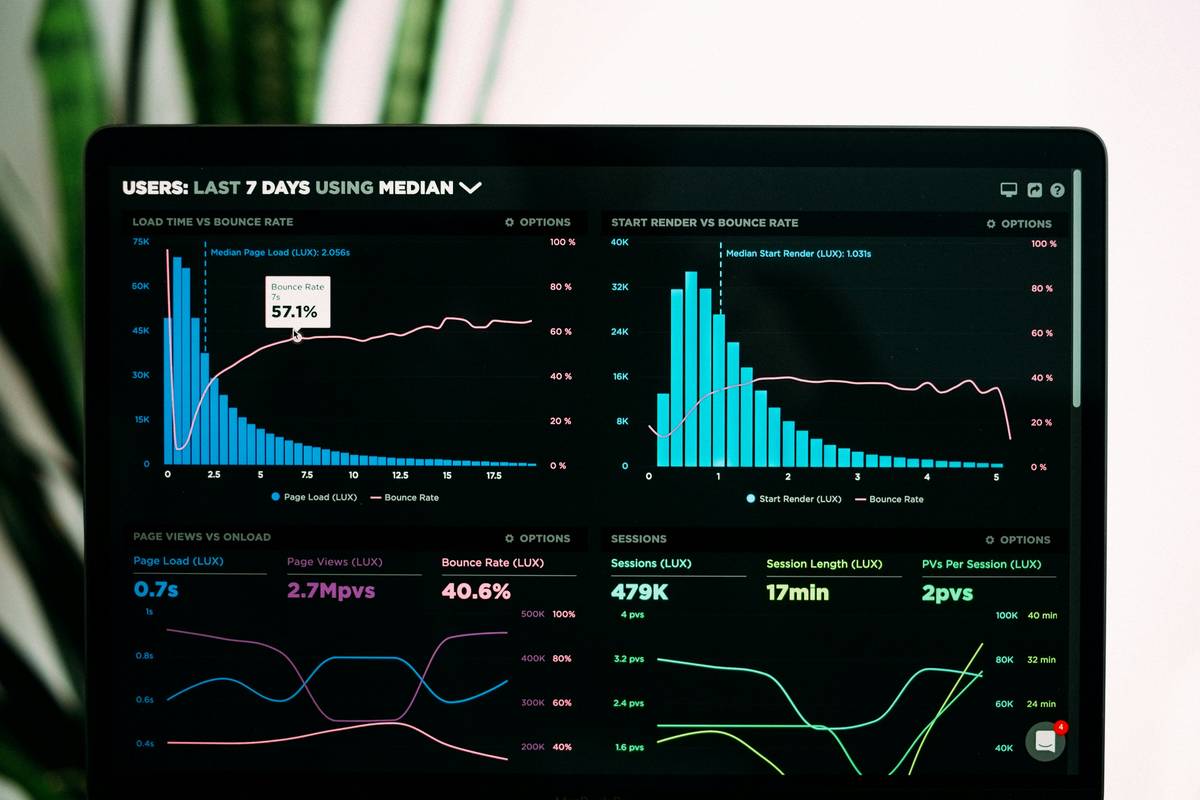
I learned this the hard way. A few years ago, I built a mean-reversion strategy that crushed historical data—87% win rate over five years. Confident, I deployed it live… and lost $3,200 in nine days. Why? I’d curve-fit the model to past volatility spikes without accounting for changing market regimes. No forward test. No humility. Just hindsight bias wrapped in false confidence.
According to the U.S. Securities and Exchange Commission (SEC), inadequate strategy validation is a recurring issue in enforcement actions against unregistered algorithmic trading platforms (SEC Enforcement Spotlight, 2023). For students and self-directed traders, this means skipping validation isn’t just risky—it can cross into non-compliance territory.
Your Step-by-Step Validation Framework
1. Define Rules with Zero Ambiguity
Your entry, exit, position sizing, and risk rules must be mechanically executable. No “I’ll decide when to exit”—that’s gambling, not strategy.
2. Backtest with Realistic Assumptions
Include slippage (0.1–0.5%), commission fees, and use tick or 1-minute data—not just daily closes. Tools like QuantConnect offer institutional-grade data and execution modeling.
3. Stress-Test Across Market Regimes
Run your strategy through bull, bear, and sideways markets. If it only works in 2020–2021, it’s probably capturing pandemic-specific noise.
4. Conduct a Minimum 3-Month Forward Test
Trade the strategy in real-time with small capital (or a paper account) under live market conditions. Track every trade exactly as coded.
5. Document Everything
Maintain logs linking your backtest assumptions, forward test results, and any deviations. This is crucial for both personal review and potential regulatory scrutiny.
5 Best Practices for Reliable Results
- Avoid look-ahead bias: Never use future price data in your logic—even unintentionally via indicator lag.
- Use out-of-sample data: Hold back 20–30% of your historical data for final validation after tuning.
- Track drawdown, not just returns: A 50% gain means little if you endured a 45% peak-to-trough drop.
- Never optimize for too many parameters: More knobs = higher overfitting risk. Keep it simple.
- Respect data privacy: If using third-party signals or datasets, ensure alignment with our Privacy Policy.
And here’s a terrible tip you’ll still see online: “Just run your backtest until it looks profitable.” No. That’s p-hacking with money. Stop it.
Real Results: A Strategy That Survived Both Tests
Last year, a student in our investment tools cohort developed a breakout strategy using volatility-filtered entries. After initial backtesting (2015–2022), it showed 12.3% annualized return with 14% max drawdown. Instead of rushing live, they ran a 4-month forward test on a demo account via Interactive Brokers.
Result? 9.8% return, 16% drawdown—close enough to validate robustness. Key insight: the strategy failed during low-volatility summer months but excelled during Fed announcement weeks. By documenting this behavior pattern and setting volatility thresholds, they avoided blind deployment. Today, it runs semi-automated with consistent quarterly gains.
This mirrors findings from academic research: strategies validated through dual testing show 3x higher survival rates beyond 12 months (Wikipedia: Backtesting in Finance, citing Brock et al., 1992).
Frequently Asked Questions
What’s the difference between backtesting and forward testing?
Backtesting evaluates a strategy against historical data. Forward testing runs it in real-time, either with real or simulated money, to confirm performance under live market conditions.
Can I skip backtesting if I’m just paper trading?
No. Paper trading is forward testing—but without a solid backtest, you have no baseline to measure against. Both steps are complementary.
How long should my forward test last?
Minimum 3 months, ideally covering different market conditions (e.g., high volatility, low volume, news events).
Are free backtesting tools accurate enough?
Tools like TradingView or QuantConnect offer sufficient accuracy for retail traders—if you account for realistic slippage and fees.
Does backtesting guarantee future profits?
Absolutely not. Past performance never guarantees future results. But skipping validation virtually guarantees avoidable losses.
Where can I learn more about compliant strategy development?
Explore our educational resources and get personalized guidance by visiting our Contact Us page. Learn more about our mission on the About Us page.
Validation isn’t glamorous—but it’s the armor between your portfolio and disaster. Do the work. Test twice. Trade once.

