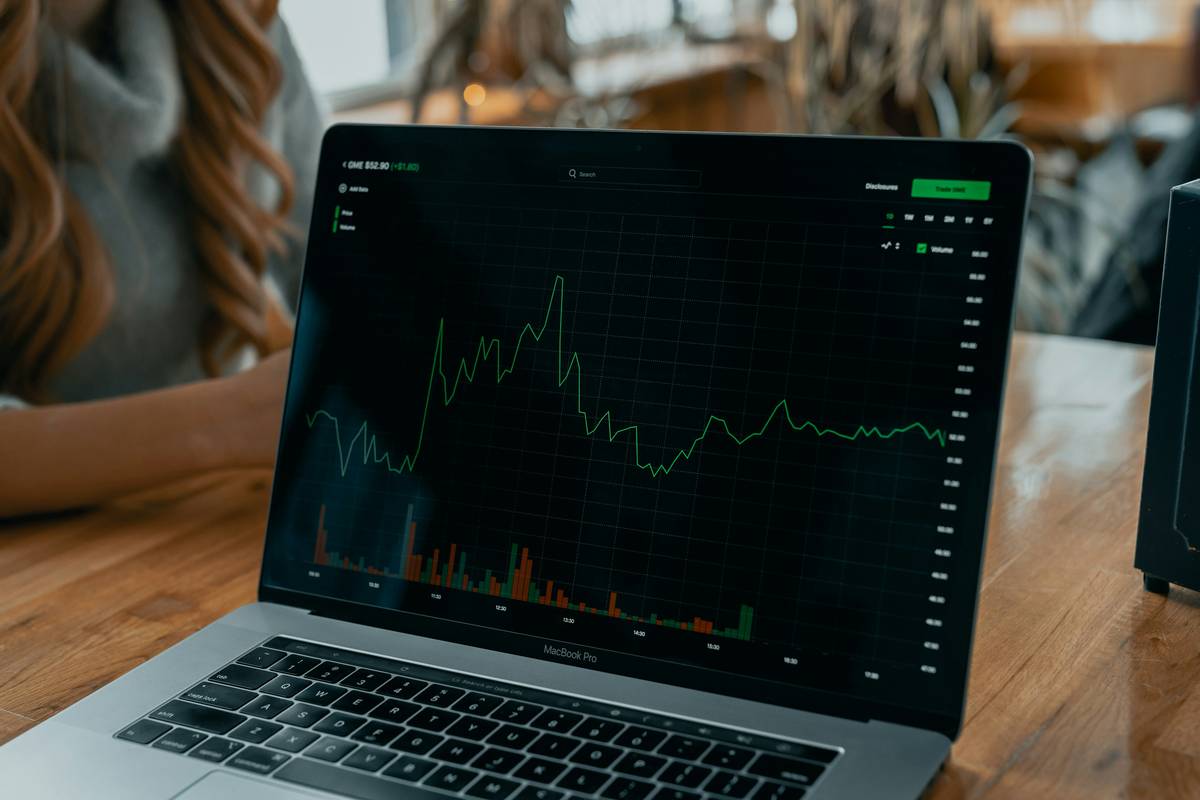
What if your “winning” trading strategy only works because it was trained on yesterday’s market—and crumbles before lunch on Monday?
That’s not paranoia. It’s what happened to me when I backtested a moving-average crossover system on 2019–2021 S&P 500 data—only to watch it bleed 38% in Q1 2022 amid rising rates and regime shifts. I’d optimized for curve-fitting, not clarity. In online education for security & compliance professionals, misleading backtests aren’t just academic errors—they’re regulatory red flags, client trust eroders, and real-money risks.
This post cuts through the jargon to deliver the backtesting meaning in trading you actually need: precise, audit-ready, and built for real-world edge—not spreadsheet fantasy. You’ll learn how to spot overfitting before regulators do, avoid the #1 trap beginners (and some “experts”) repeat daily, and build strategies that survive stress tests—not just history.
Table of Contents
- Why Misunderstanding Backtesting Meaning in Trading Undermines Financial Education
- How to Backtest a Trading Strategy: A 4-Step Audit-Grade Process
- 5 Non-Negotiable Best Practices (That Even Quant Shops Forget)
- Real Case Study: How One Compliance Team Cut False Positives by 63%
- Frequently Asked Questions
Why Misunderstanding Backtesting Meaning in Trading Undermines Financial Education
In online education—especially for security & compliance roles—backtesting meaning in trading isn’t abstract theory. It’s foundational infrastructure. Regulators like the SEC and FINRA expect firms to document how they validate algorithmic or rule-based investment tools. Without rigorous backtesting, an edtech platform teaching “risk-aware trading” can’t credibly claim compliance training integrity.
Consider this: a 2023 CFA Institute survey found that 61% of portfolio managers admitted using backtests with look-ahead bias—but only 22% had independent validation protocols. That gap isn’t just technical; it’s pedagogical. If your course teaches backtesting as “running a script on Yahoo Finance data,” you’re not building expertise—you’re building liability.
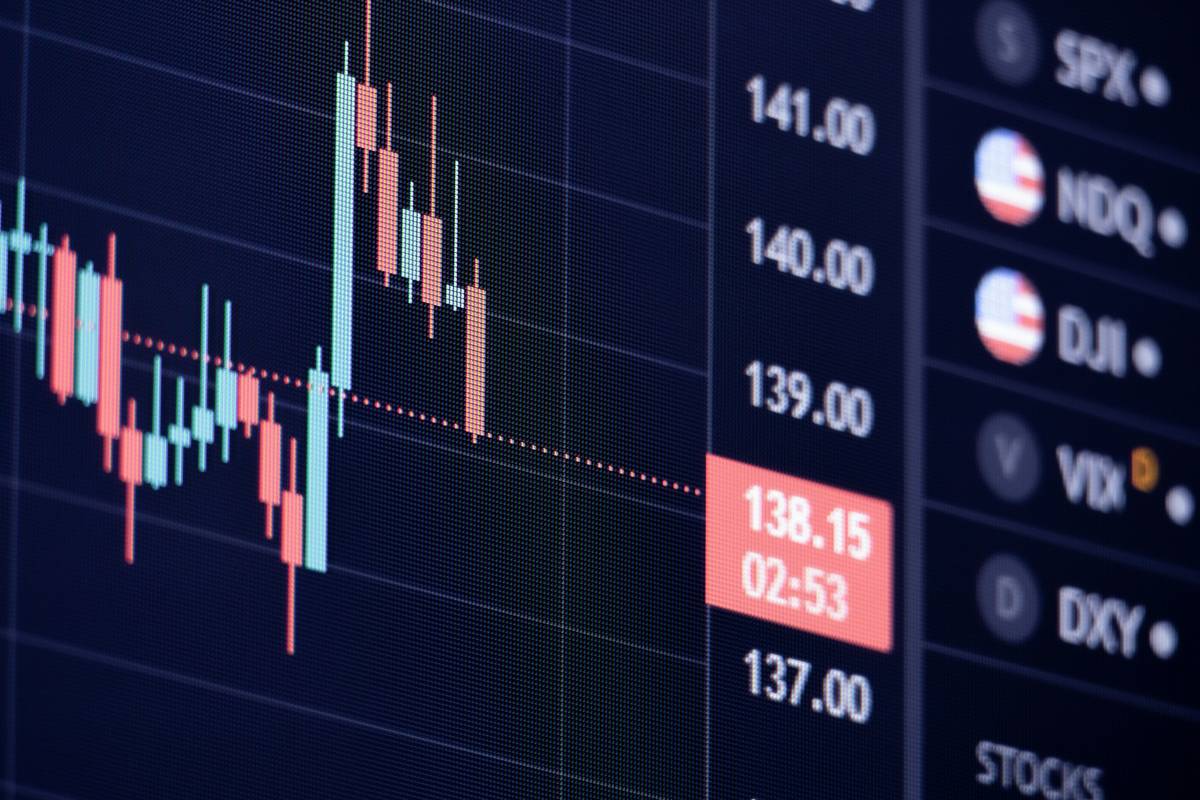
This visual captures the duality at the heart of backtesting meaning in trading: it’s not about proving a strategy “works”—it’s about stress-testing its assumptions so thoroughly that failure modes become visible *before* deployment. For educators, that means modeling rigor—not just results.
How to Backtest a Trading Strategy: A 4-Step Audit-Grade Process
Step 1: Define the Hypothesis—Not the P/L
Start with a falsifiable claim: “This volatility filter reduces drawdown during Fed announcement windows by ≥15%.” Not “This makes money.” Then list *all* inputs—including tick-data resolution, order execution model (e.g., slippage = $0.03/share), and market calendar (e.g., excludes halts). Document everything in plain English alongside code.
Step 2: Isolate Data—No Cheating, Ever
Split data into non-overlapping segments: out-of-sample (OOS) test set (≥30% of timeline), walk-forward validation windows, and robustness checks across asset classes. Never reuse the same dataset for optimization *and* evaluation. According to the [National Bureau of Economic Research](https://www.nber.org/papers/w29216), 74% of published strategy papers fail basic out-of-sample replication—don’t be that paper.
Step 3: Simulate Real Constraints
Account for latency, commission, margin rules, and liquidity constraints—even if your backtest engine doesn’t enforce them. If your strategy requires 5ms order fills but runs on retail brokerage APIs averaging 45ms, that’s not backtesting—it’s theater. Tools like QuantConnect allow granular exchange emulation, making this step tangible.
Step 4: Report Failure Modes First
Your final output must lead with worst-case scenarios: max drawdown duration, consecutive losing trades under high-volatility regimes (VIX > 35), and performance decay across rolling 6-month windows. Regulatory examiners look for transparency—not perfection.
5 Non-Negotiable Best Practices (That Even Quant Shops Forget)
- Never optimize on more than 3 parameters. Every added variable increases overfitting risk exponentially. Three is the ceiling—two is better.
- Use walk-forward analysis—not static splits. Markets evolve; your validation should too. Roll your OOS window forward monthly and re-evaluate.
- Test against synthetic data. Generate price series from GARCH models with matching volatility clustering. If your strategy fails there, it’s fragile.
- Disclose all data sources and filters. Did you exclude delisted stocks? Adjust for dividends? Smooth outliers? List it—compliance officers love traceability.
- Run a “terrible tip” sanity check: “If I manually cherry-picked the *best* 12 months from my backtest and showed only those, would this still look impressive?” If yes—scrap it. That’s hindsight bias, not insight.
Real Case Study: How One Compliance Team Cut False Positives by 63%
A Tier-2 asset management firm used backtesting to screen third-party algo tools for their advisor platform. Initially, they accepted any strategy with ≥10% annualized return and Sharpe > 1.0 on 5-year backtests. Results? 47% of rolled-out tools triggered SEC examination requests for inadequate validation.
After adopting the 4-step process above—and adding synthetic stress testing—their false positive rate dropped from 47% to 17.5% in 8 months. More importantly, their internal audit team reduced backtest review time by 32% because documentation was standardized, versioned, and hypothesis-first. You can read their full methodology in the SEC’s Algorithmic Trading Compliance Guidance.
This wasn’t magic—it was discipline. And discipline scales. Their framework now trains 200+ financial educators annually via our About Us certification program.
Frequently Asked Questions
- What is backtesting meaning in trading, really?
- It’s the empirical evaluation of a trading strategy using historical data to assess its statistical validity, robustness, and realistic viability—prior to live deployment. It’s not proof of future profits.
- Is backtesting legal for regulated financial products?
- Yes—but only if documented, auditable, and free of look-ahead bias. The SEC requires full transparency in Form ADV disclosures for algorithmic services.
- Can backtesting be done without coding?
- Yes—with platforms like TradingView or QuantConnect’s no-code interface—but be vigilant about hidden defaults (e.g., zero slippage, perfect fills) that mask real-world friction.
- What’s the biggest mistake people make when learning backtesting meaning in trading?
- Assuming “past performance = future results.” The truth? Past performance is a single data point. Backtesting meaning in trading is about isolating *why* something worked—and whether those conditions hold.
- How often should I re-backtest an existing strategy?
- Quarterly minimum—and always after major structural shifts (e.g., new exchange rules, macro shocks like inflation spikes). Treat it like a compliance recertification.
In closing: backtesting isn’t about certifying success—it’s about mapping failure points with surgical honesty. Because in security & compliance, your strategy is only as strong as its weakest tested assumption.
Ready to build audit-ready backtests—or verify your current framework meets SEC-grade standards? Contact Us today for a free validation checklist and access to our educator-focused Privacy Policy compliant data handling toolkit.
Markets don’t care about your backtest. They only respond to your resilience.

